
The renewable energy-powered electric barge project, jointly developed by CMA CGM, Nike, and Gemadept, marks a significant step forward in Vietnam’s transition toward greener transportation. With an estimated annual carrying capacity of more than 50,000 TEUs, the initiative is expected to reduce approximately 778 tons of CO₂ emissions, contributing to a more sustainable and low-carbon supply chain.
Green Logistics Drives the Transition Toward Sustainable Transportation in Vietnam
Vietnam has an extensive inland waterway network spanning more than 42,000 kilometers of rivers and canals, particularly across the Mekong Delta and the Southern Key Economic Region. This geographical advantage enables inland waterway transportation to play a vital role in connecting industrial zones and logistics hubs with major seaports, especially the Cai Mep–Thi Vai port complex and Cat Lai Port.
As Vietnam moves toward its national target of achieving net-zero emissions by 2050, reducing emissions from transportation activities has become increasingly important. At the same time, Environmental, Social, and Governance (ESG) standards are gaining greater attention from multinational corporations and global supply chain stakeholders seeking to strengthen their sustainability commitments.
For major manufacturers and exporters such as Nike, optimizing transportation operations is not only essential for improving operational efficiency but also for meeting environmental commitments. As a result, transitioning to cleaner energy-powered transportation is becoming a key priority for Vietnam’s logistics industry.
CMA CGM, Nike, and Gemadept Partner to Launch Vietnam’s First Electric Barge
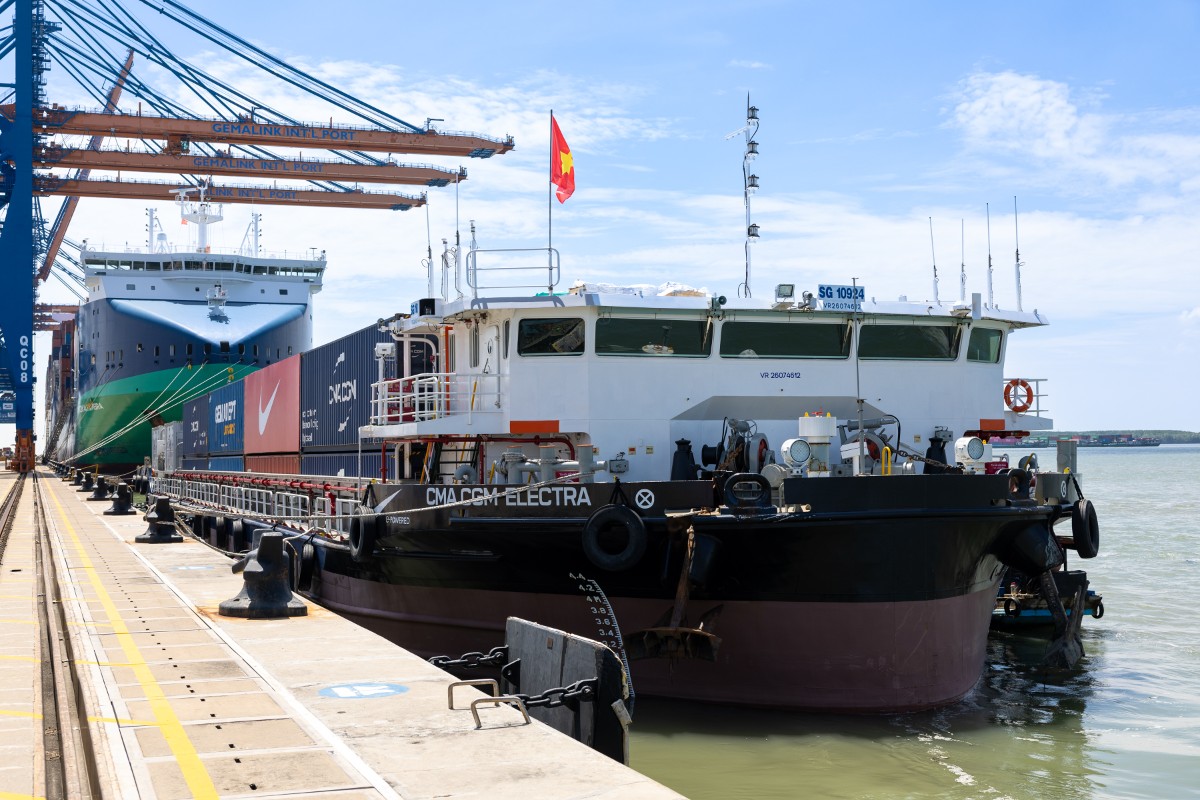
On October 29, CMA CGM, Nike, and Gemadept announced their collaboration on an electric barge project powered entirely by electricity generated from renewable energy sources in Vietnam. This initiative is recognized as the country’s first fully electric barge project, representing a significant milestone in the application of green transportation technology to domestic logistics operations.
Under the project, the electric barge will transport cargo between Nike’s inland cargo consolidation facility in Ho Chi Minh City and Gemalink deep-water port, covering a round-trip distance of approximately 180 kilometers.
The project is expected to deliver substantial environmental benefits, with an estimated reduction of approximately 778 tons of CO₂ emissions annually. In addition, the barge is designed to handle more than 50,000 TEUs per year, strengthening connectivity between domestic logistics networks and international seaports.
Advanced Battery Technology and Renewable Energy Charging Infrastructure
The electric barge was developed by CMA CGM’s shipbuilding and Research & Development (R&D) teams, incorporating battery technology supplied by CATL.
One of the project’s key features is its ability to fully recharge in approximately four hours using certified renewable electricity. In addition, dedicated charging infrastructure has been established at Gemalink Port, powered by an on-site solar energy system developed within the port facility.
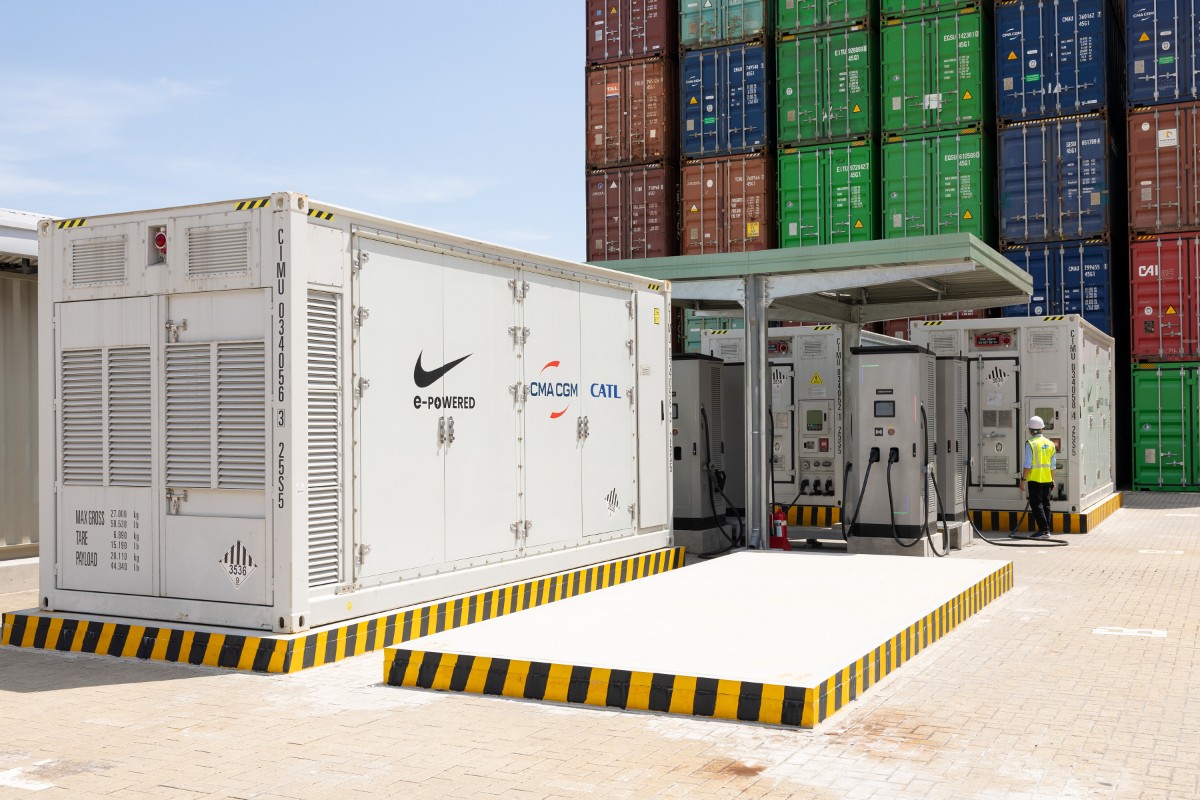
Integrating electric-powered transportation with solar-powered charging infrastructure creates a coordinated operating model that reduces dependence on fossil fuels and minimizes emissions generated during cargo transportation.
This approach also represents an important step toward developing a green logistics ecosystem, where both transportation equipment and port infrastructure are designed around energy efficiency and emissions reduction.
The Impact of Electric Barges on Vietnam’s Supply Chain and Logistics Industry
The introduction of electric barges brings significant benefits to domestic cargo transportation, particularly in connecting manufacturing centers, inland cargo consolidation facilities, and deep-water ports.
Compared with road transportation, inland waterway transport offers advantages in terms of carrying large volumes of cargo. When combined with electric propulsion and renewable energy, this transportation method has greater potential to reduce carbon emissions and improve the environmental performance of the overall supply chain.
For importers and exporters, adopting greener transportation solutions can also help meet increasingly stringent international requirements regarding ESG standards, emissions tracking, and sustainable business practices.
More importantly, the partnership between a global shipping company, a major manufacturer, and a port operator demonstrates the importance of collaboration among supply chain stakeholders in turning green logistics initiatives into practical solutions.
Prospects for Expanding the Electric Barge Model in Vietnam
Mr. Do Cong Khanh, Deputy General Director of Gemadept Group and Chairman of Gemalink Deep-Sea Port, stated that the project demonstrates how sustainability ambitions can be transformed into practical transportation solutions. He also expressed confidence in the potential to expand this model, contributing to Vietnam’s long-term transition toward low-carbon logistics.
Meanwhile, Ms. Christine Cabau, Executive Vice President of Assets and Operations at CMA CGM, emphasized that the project reflects the collaboration between shipping companies, businesses, and port operators in fulfilling their commitments to reducing carbon emissions across global supply chains.
According to her, Vietnam has considerable potential to develop sustainable domestic transportation solutions while strengthening its capabilities in the renewable energy sector. The initiative also reinforces CMA CGM’s long-term commitment to Vietnam and the broader Southeast Asian region.
Currently, CMA CGM operates 29 weekly shipping services connecting seven ports across Vietnam. Through its integrated multimodal transportation network, supported by CEVA Logistics, the group continues to connect Vietnamese businesses with major global markets.
Source:
https://vneconomy.vn
https://htv.vn
PACIFIC STAR LOGISTICS CO.LTD
📞 +84 938 111 005
📩 info@pasl.com.vn
🏘️27-29 Ngo Thi Bi Street, Tan Hung Ward, Hochiminh City