


The Vietnamese government has outlined a strategic direction to establish key maritime industrial and offshore engineering centers linked with seaport systems, logistics, and supporting industries. This is considered a crucial step to enhance domestic ship-building and repair capabilities, gradually master core technologies, and build a modern maritime industrial ecosystem with international competitiveness.
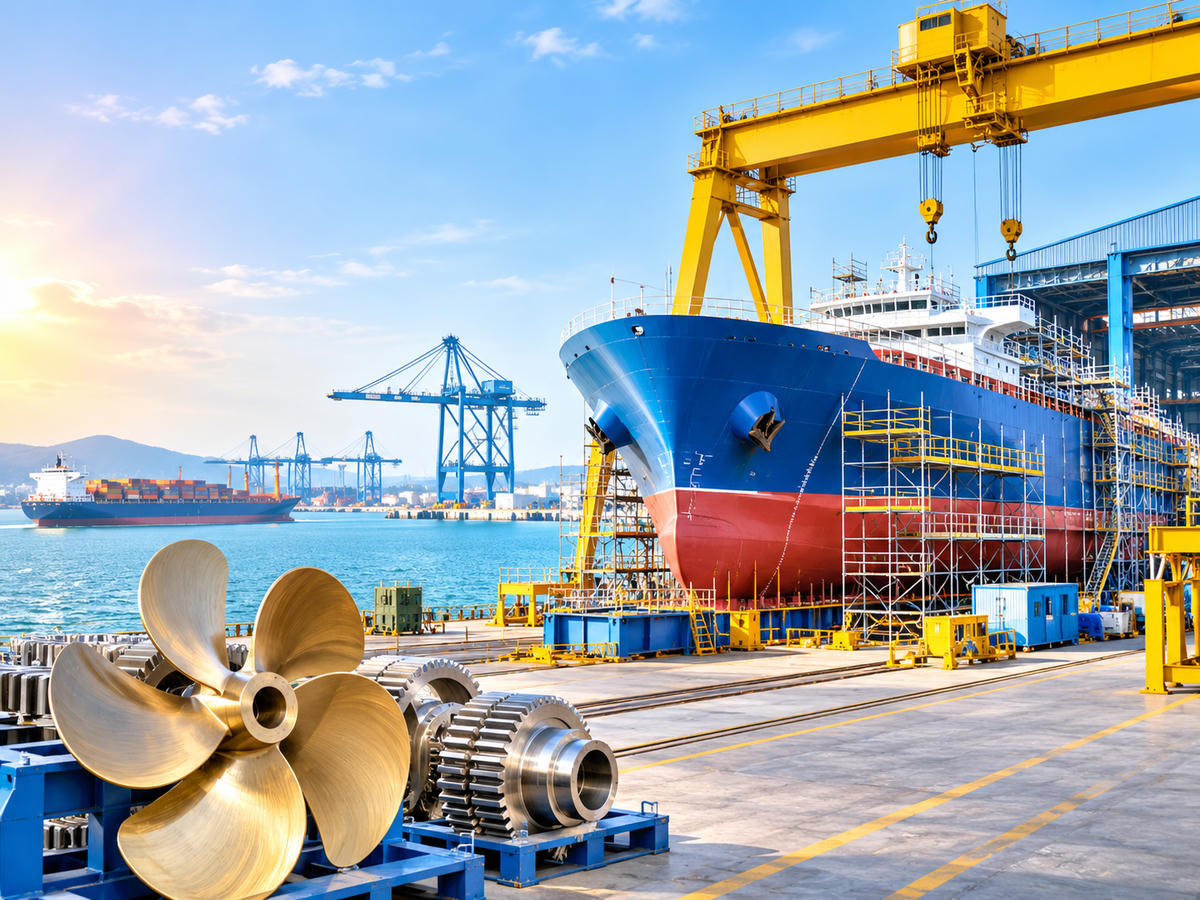
Government Rolls Out National Maritime Industry Development Plan
On November 3, 2026, Permanent Deputy Prime Minister Phạm Gia Túc signed Decision No. 2089/QĐ-TTg, promulgating the implementation plan for Notice No. 125-TB/VPTW issued on July 18, 2026, by the Party Central Office regarding General Secretary and State President Tô Lâm’s directives on the strategic direction for developing Vietnam’s national maritime industry.
The plan aims to foster synchronous changes in awareness and action across ministries, sectors, localities, enterprises, and relevant organizations, thereby positioning the maritime industry as a pillar in Vietnam’s marine economic development strategy.
According to this framework, the development of the maritime industry extends beyond shipbuilding to encompass highly interconnected sectors such as vessel repair and conversion, offshore engineering, maritime equipment manufacturing, supporting industries, technical services, and port exploitation activities.
To realize these goals, the plan sets out 10 key task and solution groups aimed at resolving bottlenecks in institutions, mechanisms, policies, finance, technology, human resources, and markets. These solutions also focus on efficiently leveraging existing production capacities, strengthening inter-enterprise cooperation, and promoting deeper integration of Vietnam’s maritime sector into global value chains.
A core task is formulating the National Program for the Development of the Maritime Industry and Offshore Engineering through 2035, with a Vision to 2050. This program will serve as the foundation for identifying priority sectors, guiding investments, advancing technologies, and reorganizing industrial production spaces in the long term.
Establishing Maritime Industrial Centers Linked to Seaports and Logistics
A notable highlight of the plan is the focus on establishing several key maritime industrial and offshore engineering clusters nationwide.
These centers will be selected based on geographical advantages, natural conditions, technical infrastructure, transport connectivity, workforce availability, and enterprise production capabilities in each region.
Rather than developing isolated, dispersed production facilities, Vietnam aims for a specialized and highly interconnected maritime industrial cluster model. Within this model, shipbuilding, vessel repair, equipment manufacturing, material supply, and technical services are tightly integrated with seaports, inland waterway ports, logistics centers, and supporting industries.
This model is expected to forge a relatively complete supply chain—from design, raw material supply, component manufacturing, assembly, and new construction to vessel operation, maintenance, and repair.
Linking maritime industrial centers with seaport systems is vital for optimizing the transport of raw materials, equipment, and finished products. Consequently, enterprises can cut logistics costs, shorten project timelines, and enhance infrastructure utilization efficiency.
Crucially, the plan emphasizes focused and targeted investment selection. Projects must fully capitalize on regional advantages while avoiding scattered, overlapping investments or the creation of industrial zones with duplicate functions lacking proper linkage.
This orientation aligns with the master plan for developing Vietnam’s seaport system for the 2021–2030 period, with a vision toward 2050 and subsequent planning adjustments issued in 2026. Notably, adding provisions for concentrated marine industrial zones across the Northern, Central, and Southern regions opens up opportunities to form large-scale production hubs.
Over the long term, these maritime industrial centers will not only serve domestic demand but also attract regional orders for new construction, repair, and maintenance, provided they meet international standards regarding quality, delivery schedules, cost, and technical specifications.
Expanding Vessel Repair, Conversion, and Recycling
Alongside new construction, the government aims to develop centers for vessel repair, conversion, dismantling, and recycling based on a circular economy model.
This is a pragmatic approach amid growing demand to maintain, upgrade, and extend the operational lifecycles of commercial fleets. Rather than relying solely on new builds, domestic enterprises can expand revenue streams through technical services, routine maintenance, structural conversions, and equipment upgrades.
For repair and conversion, investing in advanced technology, modern equipment, and highly specialized technical teams will enable local shipyards to secure complex, high-value contracts. This also presents an opportunity for domestic shipyards to integrate deeper into the international maritime services market.
In vessel dismantling and recycling, strict compliance with environmental protection, occupational safety, and waste management standards is mandatory. Operations must follow appropriate technical protocols to recover reusable materials, minimize hazardous waste, and mitigate environmental impacts on marine ecosystems.
Promoting a circular economy in the maritime sector also unlocks growth avenues for material producers, metal recyclers, industrial waste processors, and environmental service providers.
As a result, the maritime industrial ecosystem can expand beyond manufacturing new products toward efficiently harnessing the value of vessels, equipment, and materials throughout their entire lifecycles.
Researching Financial and Credit Mechanisms to Support Shipbuilders
A major challenge facing the shipbuilding industry is high capital requirements and extended project implementation timelines.
By nature, shipbuilding, repair, or conversion contracts require substantial financial resources. Enterprises must front-load capital for designs, raw materials, machinery, equipment, labor, and engineering systems well before project delivery and capital recovery.
Meanwhile, contract execution can involve various risks related to raw material price fluctuations, exchange rates, equipment supply timelines, technical modifications, and client changes.
Recognizing these characteristics, the national maritime industry development plan mandates perfecting financial, credit, guarantee, and insurance mechanisms tailored to shipbuilders.
Authorities will propose support policies based on principles of transparency, eligibility compliance, and alignment with Vietnam’s international commitments.
Support will be contingent upon actual corporate capabilities, investment efficiency, capital repayment capacity, and a project’s contribution to domestic industrial capability.
Project capital sources will be diversified, including state budgets, corporate equity, bank credit, capital markets, public-private partnerships (PPPs), and other legal sources.
Notably, projects capable of mastering technologies, raising localization rates, developing supporting industries, and generating domestic added value will receive priority access to resources.
Additionally, the government encourages credit institutions and insurance companies to develop specialized financial products for the shipbuilding sector, meeting contract schedule capital needs, project execution guarantees, and risk insurance during new construction.
Implementing these mechanisms synchronously will improve capital access, ease financial pressures, and elevate the competitiveness of Vietnamese enterprises against international rivals.
Reviewing Shipbuilding Capacity and Building a National Database
Another critical task is conducting a comprehensive evaluation of the current status and capacity of Vietnam’s maritime industry.
This review covers ship design, new construction, repair, vessel conversion, offshore engineering, and supporting industries. Authorities will also assess production facilities, technical infrastructure, machinery, equipment, workforce capabilities, research and development (R&D) capacities, and maritime registration systems.
Based on findings, a unified set of criteria will be established to categorize the capacity of production facilities, enterprises, and related units.
Simultaneously, a National Maritime Industry Database will be established to support management, policymaking, and investment organization.
Given the sector’s broad scope and diverse stakeholders, a comprehensive database will provide managers with accurate insights into industry strengths and weaknesses.
Consequently, production facilities can be appropriately categorized—whether for technology preservation, technology upgrading, partnership expansion, operational restructuring, or consolidation to optimize resource utilization.
For enterprises, this database will facilitate partner searching, supply chain connectivity, and access to projects matching their production capacities.
Crucially, an objective evaluation of maritime industrial capacity will serve as the baseline for determining which technologies Vietnam can master, which sectors require technology transfer, and which areas need foreign direct investment (FDI).
Promoting R&D, Technology Transfer, and Human Resource Development
Technology is recognized as a key determinant of competitiveness in shipbuilding and offshore engineering.
Amid rising technical, safety, and environmental standards in maritime operations, enterprises can no longer rely solely on cheap labor or low production costs.
Investing in technological innovation, equipment modernization, and enhanced design capabilities is vital for upgrading the domestic maritime industry.
Priority development areas include ship design and simulation software, automated production lines, welding robots, precision mechanical processing, digital manufacturing management, and energy-saving solutions.
Concurrently, supporting industries must be developed to gradually boost local supply capacities for machinery, equipment, components, and materials used in shipbuilding. Raising the domestic manufacturing ratio cuts import dependence and generates added value for mechanical and manufacturing enterprises.
Human resources are equally indispensable. The maritime sector requires highly qualified design engineers, mechanical experts, certified welders, shipbuilders, electrical-automation specialists, and project managers.
Therefore, strengthening partnerships between training institutions, research institutes, and enterprises will bridge the gap between academic training and market demand. Alongside domestic training, international cooperation and technology transfer are pivotal to elevating workforce quality.
Strengthening International Cooperation and Global Value Chain Integration
Alongside nurturing internal capabilities, the government’s plan mandates promoting international cooperation, attracting investment, and expanding markets for Vietnamese maritime enterprises.
As a highly globalized sector, shipbuilding, maritime transport, and technical services interact closely with shipowners, carriers, equipment manufacturers, and classification societies worldwide.
Partnering with foreign entities helps Vietnamese firms access new technologies, improve governance, elevate product standards, and secure overseas orders.
However, the long-term goal extends beyond processing contracts or executing low-value-added stages. Vietnam must progressively elevate its capabilities in design, equipment manufacturing, project management, and high-tech technical services.
Furthermore, complying with international standards on maritime safety, product quality, environmental protection, and social responsibility is a prerequisite for deeper participation in global value chains.
The plan also highlights developing dual-use defense and security industries to leverage domestic research, manufacturing, and production capacities for both economic development and maritime national defense.
Seaport Planning Expands Room for Marine Industrial Growth
The strategy for maritime industrial centers is closely linked with the completion of seaport systems and national logistics infrastructure.
Under planning guidelines for 2026, Vietnam prioritizes developing concentrated marine industrial zones across the Northern, Central, and Southern regions. This provides a strong foundation to reorganize production spaces and form regional industrial clusters.
In the North, Hai Phong and neighboring areas benefit from seaport infrastructure, manufacturing industries, and transport connectivity with major production hubs, making them ideal for shipbuilding, repair, and maritime equipment manufacturing.
In the Central region, seaports combined with North-South transport routes and regional economic corridors offer strong potential for offshore engineering, technical services, and marine industries.
In the South, Ho Chi Minh City, Ba Ria – Vung Tau, and surrounding southern economic zones hold advantages in seaports, logistics, supporting industries, and international shipping lanes.
However, establishing specific centers must follow careful research, planning, and practical regional conditions. Regional distribution does not imply every locality should invest in identical production facilities.
Instead, each center must fulfill a specialized function aligned with local advantages while complementing national maritime production and service chains.
When organized synchronously, seaport systems, marine industrial zones, and logistics centers will form a robust infrastructure network supporting maritime production, transport, and distribution.
Opportunities to Elevate Vietnam’s Maritime Industry Standing
Executing the national maritime industry development plan is expected to generate profound shifts in shipbuilding and offshore engineering.
First, specialized industrial centers will concentrate investment resources, enhance infrastructure sharing, and foster linkages between shipyards and equipment, material, and technical service suppliers.
Second, favorable financial, credit, and insurance mechanisms will help overcome major corporate hurdles regarding capital mobilization for large-scale, long-term projects.
Third, capacity reviews and national database building will provide a foundation to reorganize production, eliminate resource waste, and target investments toward high-potential sectors.
Most importantly, mastering technology and increasing domestic added value will help the sector reduce foreign supply dependence and buffer against international market shocks.
Nevertheless, realizing these objectives requires close coordination across ministries, localities, financial institutions, training centers, and the business community, supported by clear timelines, explicit responsibilities, and effective monitoring mechanisms.
For enterprises, growth opportunities will demand technology upgrades, governance improvements, workforce training, and adherence to international standards. Enterprises capable of structured investments, high-value-added products, and global supply chain integration will thrive.
With a vision extending to 2035 and 2050, the national maritime industry development plan aims not only to expand shipbuilding scale but also to lay the groundwork for a modern, green, digital, and self-reliant marine industrial ecosystem.
If implemented effectively, these key maritime industrial centers will serve as a new growth engine for the marine economy, boosting domestic manufacturing, developing supporting industries, cutting logistics costs, and cementing Vietnam’s stature in regional and global maritime networks.
Source:
https://doanhnhan.congly.vn
PACIFIC STAR LOGISTICS CO.LTD
📞 +84 938 111 005
📩 info@pasl.com.vn
🏘️27-29 Ngo Thi Bi Street, Tan Hung Ward, Hochiminh City