

Global trade continues to fluctuate, supply chains are shifting, and import demands are evolving, opening up numerous opportunities for Vietnamese goods in 2027. However, to stay ahead of orders, businesses cannot rely solely on production capacity; they must select the right products, reach the right customers, and comprehensively prepare their supply capabilities.
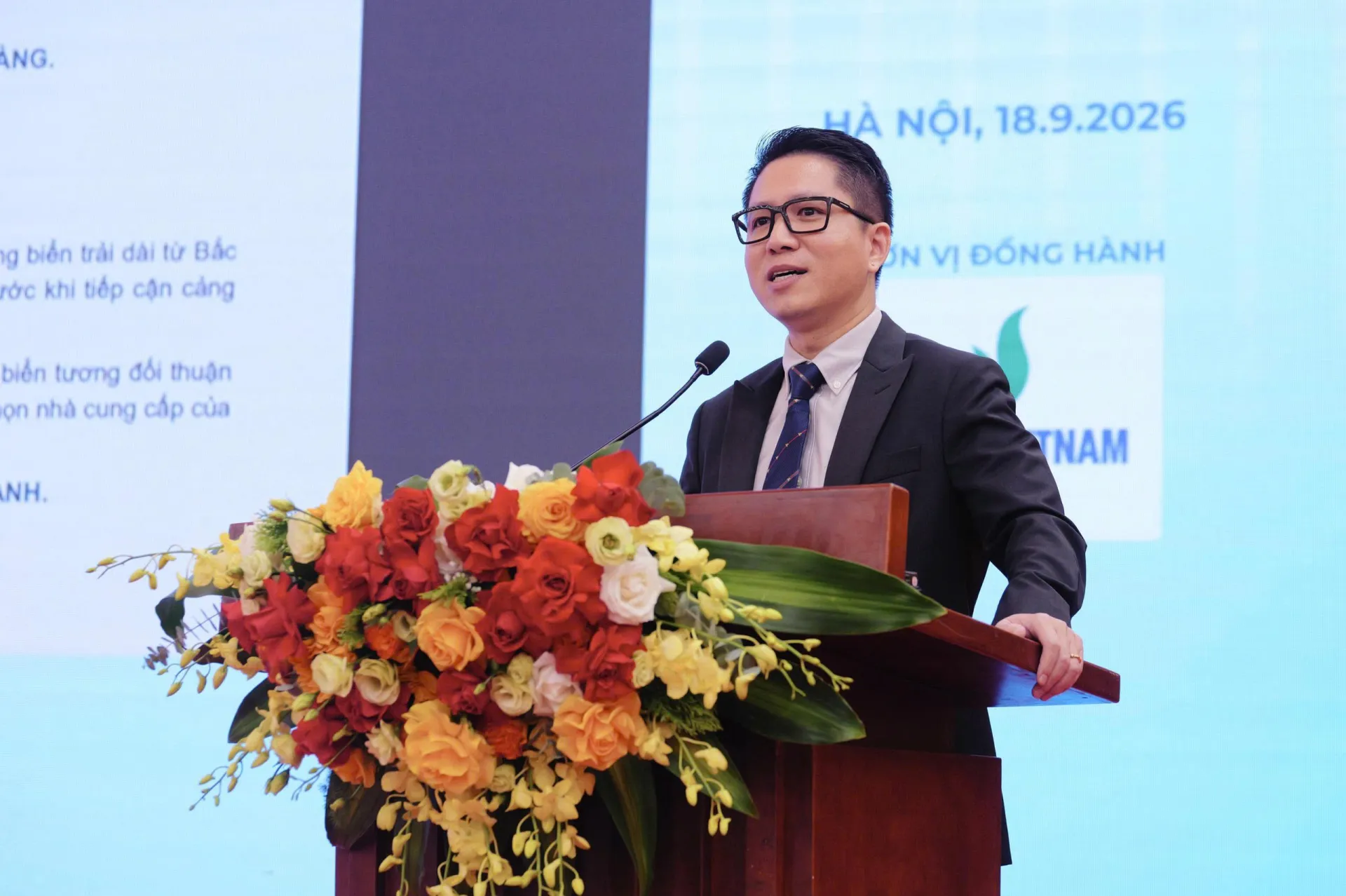
At the online webinar titled “What to Export in 2027?”, hosted by VIETGO Export Promotion Co., Ltd. on November 5, Mr. Nguyen Tuan Viet, CEO of VIETGO, analyzed notable international trade trends, shared insights on high-potential product categories, and provided guidance to help Vietnamese enterprises prepare for the 2027 export year.
Strong Export Growth, but Opportunities Do Not Come Automatically
According to Mr. Nguyen Tuan Viet, in the first 10 months of 2026, Vietnam’s total import-export turnover reached approximately $1,000 billion, with export turnover hitting nearly $500 billion.
Based on these results, Mr. Viet forecasts that total full-year import-export turnover could surpass $1,200 billion. Exports alone are expected to reach $570 – $600 billion, corresponding to a growth rate of around 20% compared to 2025.
These figures indicate that Vietnam’s international trade scale continues to expand. However, according to the CEO of VIETGO, the key lies not only in turnover growth speed but also in how many market-shift opportunities domestic enterprises can actually capture.
Mr. Nguyen Tuan Viet noted that Vietnam possesses three major advantages in export activities:
First is a relatively stable political and economic environment, providing favorable conditions for international partners to build long-term investment and cooperative relationships.
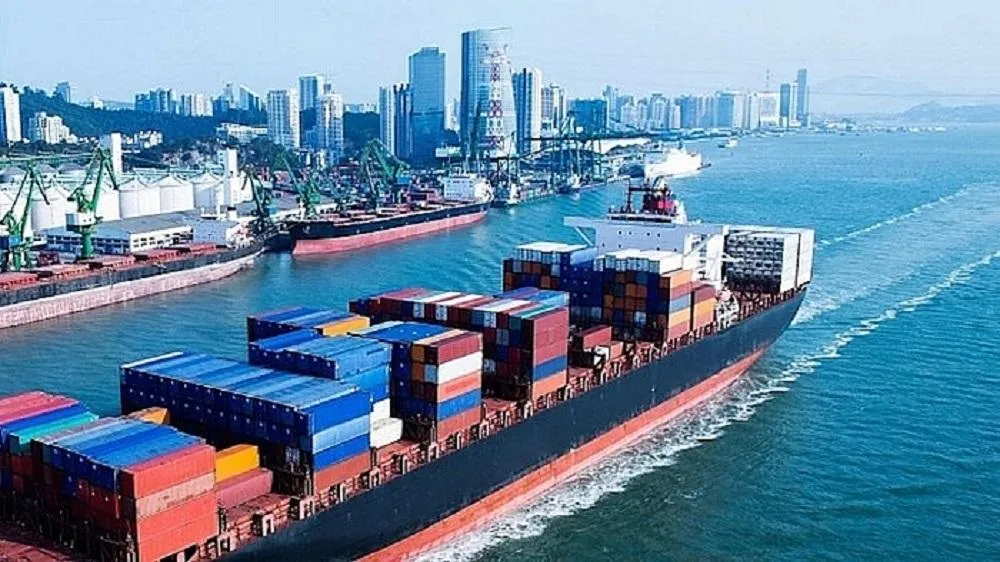
Second is geographic location and logistics advantages. With a long coastline, a location along major international maritime routes, and connectivity to major manufacturing and consumption hubs, Vietnam is well-positioned to deliver goods to the global market.
Third is a network of free trade agreements (FTAs). As shared at the webinar, Vietnam currently has 18 active FTAs, offering tariff preference opportunities for export goods upon full compliance with relevant conditions.
However, having an FTAs network does not mean goods automatically enjoy tariff preferences or sell effortlessly. Businesses must still meet rules of origin, quality standards, technical regulations, and specific market requirements.
In other words, policy advantages only generate real value when enterprises know how to leverage them and build the capacity to fulfill them.
Five Factors Shaping the 2027 Export Market
According to Mr. Nguyen Tuan Viet’s analysis at the webinar, 2027 export activities will likely continue to be influenced by five major groups of factors.
First is U.S.-China trade competition, which can alter commodity flows, tariff policies, and international enterprises’ supplier selection strategies.
Second is geopolitical developments in Russia-Ukraine and the Middle East. Conflicts can impact raw material supplies, maritime shipping lanes, energy prices, and logistics costs.
Third is India’s urbanization pace. Urban development and infrastructure expansion can drive demand for consumer goods, construction materials, machinery, and industrial equipment.
Additionally, demand for essential goods, energy, and construction materials remains a factor businesses must monitor.
These fluctuations impact not only selling prices but also direct purchasing decisions, import plans, and international partners’ supply stability.
Notably, many foreign enterprises are tending to diversify sourcing, seek new suppliers, and relocate portions of production to reduce dependence on a single market or source.
In this context, Vietnam has opportunities to receive additional orders, expand manufacturing partnerships, and attract joint ventures with foreign partners.
Nonetheless, opportunities will favor businesses capable of demonstrating production capabilities, controlling quality, and maintaining stable delivery schedules.
High-Potential Export Products for 2027 That Vietnamese Businesses Should Consider
Drawing from global trade trends and insights from the webinar, Mr. Nguyen Tuan Viet evaluated several product groups with strong potential in 2027: indoor and outdoor wooden furniture, textiles and garments, footwear, electronic components, auto parts, watercraft, and conveyors.
These are sectors where Vietnam already has production foundations or the potential to expand market share by targeting the right customer segments.
Indoor and Outdoor Wooden Furniture
Wooden furniture and outdoor furnishings remain strong categories thanks to home, office, hotel, and commercial space decor demands worldwide. Products like tables, chairs, beds, cabinets, shelves, decorations, and garden furniture can tap diverse global segments. However, instead of competing solely on price, businesses must focus on design, finishing quality, raw material origins, and custom manufacturing per importer requests.
Textiles, Garments, and Footwear
Textiles and garments, along with footwear, remain strong strengths for Vietnam, backed by production experience, a skilled labor force, and international networks. Opportunities arise from fashion goods, activewear, everyday footwear, and lines with custom designs. Even so, companies need to focus on self-sourcing raw materials and accessories, controlling quality, and meeting environmental and labor requirements in each target market.
Electronic Components
Electronic components are a notable group as nations continue expanding tech production and supply chain diversification. Items like electronic components, circuit boards, wiring, assembly parts, and accessories for industrial equipment offer opportunities for properly capable businesses. For SMEs, participating in major manufacturers’ supply chains as tier-2/3 auxiliary component suppliers is also a viable path to research.
Auto Parts
Demand for spare parts, components, and precision mechanical parts for the automotive industry is an area Vietnamese businesses can tap. However, this segment demands high precision, uniform quality, and strict production control processes. Businesses must pinpoint advantaged components, invest in technology, and meet technical requirements before scaling up.
Watercraft and Conveyors
Watercraft and conveyors were also highlighted by Mr. Nguyen Tuan Viet as high-potential groups. These products serve specialized demands in transport, industry, mining, processing, and manufacturing. Their advantage lies in fulfilling custom designs, technical specifications, and specific buyer requirements. Beyond finished products, businesses can explore replacement parts, accessories, and maintenance services to expand value.
Logistics Becomes a Decisive Factor for Export Competitiveness
Alongside order prospects, logistics costs remain a major challenge for exporters.
At the webinar, Mr. Nguyen Tuan Viet cited 40-foot container shipping rates to the Middle East. Rates previously around $1,500 – $2,000 surged to $4,000 – $6,000, with times when booking vessel space was impossible.
This demonstrates how geopolitical shifts directly impact costs and delivery timelines.
Particularly for fresh produce, transit time and preservation capabilities are vital. Businesses might secure buyers and finish production, but without cargo space, goods risk inventory buildup, cost inflation, and quality degradation.
Consequently, exporters cannot focus solely on price and volume.
The ability to proactively book space, control shipping costs, select proper routes, and maintain reliable schedules is crucial for competitiveness.
To mitigate risks, businesses must engage early with shipping lines and freight forwarders, build transport plans per order, and factor logistics costs into quotations.
Riding the 2027 Export Wave: Stop Selling Only What You Have
A prominent message at the webinar was that businesses must shift from a mindset of “selling what we have” to “selling what customers need.”
According to VIETGO CEO Nguyen Tuan Viet, quite a few enterprises invest in processed goods based on subjective assumptions without fully researching international buyers’ actual needs.
The case of dragon fruit cooperatives shifting into producing dragon fruit biscuits, crackers, jams, and candies serves as an example.
Despite having diversified processed products, securing buyers remains tough if international markets lack real demand or familiarity with those items.
According to Mr. Viet, businesses should continue leveraging fresh dragon fruit while developing dried dragon fruit to target buyers who already demand dried fruits.
New products should not be pushed onto buyers who only seek fresh fruit.
Regarding dragon fruit, Mr. Viet also noted that Chinese border traders should not be equated with large import corporations in Beijing, Shanghai, or Hangzhou.
These buyer groups differ significantly in transaction scale, purchasing styles, service requirements, and purchasing power.
The lesson is that to sell at good prices, businesses must identify exact customer segments, understand needs, and build matching products instead of chasing easy-to-reach orders.
B2B Export vs. Amazon Retail: Which Direction Should Businesses Choose?
Aside from products, business models are another consideration for 2027 export strategies.
Businesses can choose between traditional B2B export and direct online retail via Amazon.
With B2B, companies sell bulk volumes to importers, distributors, or manufacturing partners. Advantages include higher contract values and stable long-term relationship building. However, foreign trade proficiency, contract negotiation, document control, payment security, and international shipping management are required.
Meanwhile, Amazon retail opens direct access to foreign end-consumers, brand building, and sales control. However, companies must self-manage warehousing, inventory, payment processing, individual order shipping, advertising, and customer service.
Each model has unique pros and cons. Companies must base decisions on manufacturing capacity, capital, products, and operational teams.
Leveraging International Customer Data to Secure Orders
To catch export opportunities, Mr. Nguyen Tuan Viet recommended utilizing international customer databases, training programs, and export communities.
As shared at the webinar, VIETGO currently features roughly 80,000 international clients after 21 years, has trained nearly 20,000 learners, and built a community of about 2,000 exporting businesses.
These resources can assist companies in partner matching, experiential learning, and international expansion.
However, finding customers is not merely mass-emailing product introductions.
Businesses must pinpoint target customer groups, study import demand, order scales, and internal fulfillment capacities.
Classifying customers and personalizing outreach saves time, improves partner acquisition, and increases conversion rates into real orders.
Late 2026: A Crucial Timing to Prepare 2027 Orders
Another point emphasized by Mr. Nguyen Tuan Viet is year-end order locking.
The remaining period of November and December—ahead of Christmas and New Year holidays—is vital for approaching clients and planning for 2027.
This is when companies review purchasing plans, budgets, and production needs for the new year.
Proactively introducing products, sending catalogues, quotations, sharing samples, and seeking partners early grants extra time to negotiate terms, prepare materials, arrange labor, and plan schedules.
Additionally, companies should strengthen supply capabilities, supplement working capital, invest in tech, and seek foreign joint-venture opportunities.
Exports in 2027: Choose the Right Products and Customers for Sustainable Growth
Vietnam’s 2027 export outlook presents ample opportunities amidst shifting global supply chains and diversifying importer demands.
Wooden furniture, textiles, footwear, electronic components, auto parts, watercraft, and conveyors are high-potential groups highlighted at the webinar.
Nonetheless, market opportunities do not guarantee sales for every product. Businesses must understand buyer needs, select correct segments, prepare production capacities, and tightly control quality, logistics, and finances.
The core message from VIETGO CEO Nguyen Tuan Viet is that businesses should stop selling solely what they have and instead discover market needs to build proper products.
In an increasingly competitive global trade landscape, a company might win an order via low price, but retaining clients long-term demands stable quality, punctual delivery, and professional cooperation.
That is how Vietnamese goods can capture 2027 export opportunities while elevating their standing in the international arena.
Source:
https://tiepthigiadinh.vn
https://jobsgo.vn
PACIFIC STAR LOGISTICS CO.LTD
📞 +84 938 111 005
📩 info@pasl.com.vn
🏘️27-29 Ngo Thi Bi Street, Tan Hung Ward, Hochiminh City