
On 25 November 2026, the Office of the United States Trade Representative (USTR) released its preliminary findings in the Section 301 investigation under the Trade Act of 1974 concerning structural overcapacity and excess production in manufacturing industries. Under the proposal, imports from Vietnam may be subject to an additional tariff of up to 35%. Should the two countries conclude a reciprocal, fair and balanced Trade Agreement (ART), the rate could be reduced to 20%. This development is significant for Vietnamese exporters, given that the United States remains a key destination market for numerous domestic product categories. Although the proposal is not yet a final determination, it already requires enterprises engaged in trade with the U.S. market to reassess export plans, transaction costs and logistics arrangements.
Enterprises must look beyond the eventual tariff rate itself. Order retention, price renegotiation and logistics cost control will also have a direct impact on business performance in the coming period.
The 35% Tariff Remains a Preliminary Proposal; Vietnam Continues to Respond
On the evening of 25 November 2026 (Vietnam time), USTR published preliminary conclusions covering 14 of the 16 economies under investigation. The inquiry, conducted pursuant to Section 301 of the Trade Act of 1974, focuses on allegations of structural overcapacity and excess production in manufacturing sectors.
For Vietnam, the maximum proposed additional tariff is 35%. In the event an ART agreement is reached, the rate may be adjusted downward to 20%. These figures, however, remain part of the preliminary report and do not yet constitute an enforceable measure on imports.
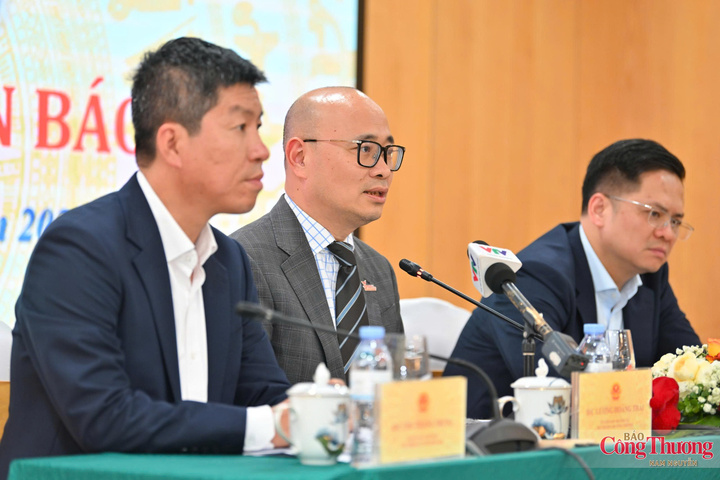
At a press conference on the afternoon of 26 November, Deputy Minister of Industry and Trade Lương Hoàng Thái stated that Vietnam will continue to submit information, provide comments and participate in public hearings in accordance with the U.S. investigative process.
The Ministry of Industry and Trade is coordinating with relevant agencies, industry associations and affected enterprises to supply data on Vietnam’s production and trade situation. In recent international exchanges, several CPTPP, ASEAN and European Union members have also expressed disagreement with USTR’s allegations regarding global manufacturing overcapacity.
A notable element of the preliminary findings is a proposed exclusion list comprising 2,121 tariff lines at the 8-digit HS level. Consequently, it cannot be assumed that all Vietnamese exports will face the same additional duty.
Enterprises must accurately match the HS codes of individual products against the exclusion list and related conditions. Misclassification or uncertainty regarding the scope of application may result in inaccurate import-cost assessments, affecting pricing and contract negotiations.
What Should the Textile, Wood, Seafood and Electronics Sectors Prepare For?
The impact of the proposed tariff will vary by industry, product characteristics and transaction terms. For enterprises with substantial revenue exposure to the U.S. market, contingency planning should begin at the contract negotiation stage.
Textile and apparel sector: Most enterprises operate on confirmed purchase orders, production schedules and agreed delivery windows. A change in tariff policy may prompt U.S. importers to seek renegotiation of purchase prices, delivery timing or terms for new orders.
For example, an apparel manufacturer that has already secured fabric and accessories for the next selling season may face requests to share the additional cost burden or revise selling prices. Order delays would further generate finished-goods storage costs, revised booking schedules and the risk of missing delivery deadlines.
Wood and furniture sector: These products are typically bulky and require specialized packing and container stowage. Order adjustments or delivery postponements can disrupt container planning, warehousing and vessel utilization.
If importers request shipment splitting or deferred delivery, exporters must recalculate container requirements, inland transport costs and port-related charges. Multi-SKU furniture orders demand particularly close coordination among production, warehouse and freight-forwarding teams.
Seafood sector: This category imposes strict temperature-control and transit-time requirements. Frozen products must maintain the cold chain from cold store through port handling and ocean or air transit.
Delivery delays may necessitate extended cold storage, revised vessel schedules or additional preservation costs. For products with limited shelf life and stringent quality controls, rapid adjustment of logistics plans is essential to protect product integrity.
Electronics sector: Manufacturers and exporters must tightly synchronize component supply, production schedules and delivery windows. A shift in U.S. import demand can force adjustments to finished-goods inventory, stock levels and transport schedules.
For high-value or time-sensitive shipments, the choice between ocean and air freight must be evaluated against transit time, cost and handling requirements. Changes in the buyer’s receiving schedule require a fresh assessment of the delivery mode to avoid unnecessary cost escalation.
In all cases, the effects of tariff policy extend beyond the payment of import duties to production planning, inventory management, logistics execution and cash-flow control.
Negotiation Pressure Between Vietnamese Exporters and U.S. Importers
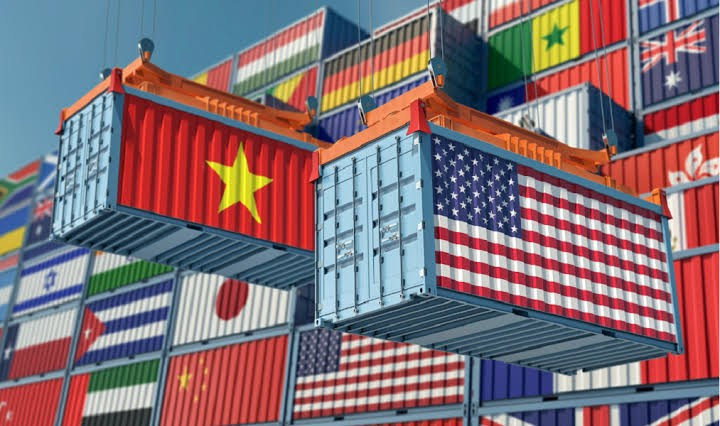
A critical issue is the allocation of responsibility when import costs rise. In international sales contracts, the parties typically agree on price, delivery terms, transport responsibilities and related obligations. The prospect of an additional tariff can reopen these commercial terms for renegotiation.
Under FOB terms, for instance, the U.S. importer normally bears import-duty liability. Nevertheless, the importer may still request the Vietnamese supplier to adjust the purchase price to share the cost pressure. Under CIF or DAP terms, the parties must clearly distinguish transport, insurance and delivery obligations from the ultimate duty liability. Incoterms allocate costs and risks according to the chosen delivery term but do not automatically determine which party bears import duties; this must be expressly stipulated in the contract.
Long-term contracts should incorporate policy-risk mechanisms. Ambiguous commercial clauses can leave exporters exposed when the parties cannot agree on how to handle incremental costs.
Potential Impact on Ocean Freight and Logistics Operations
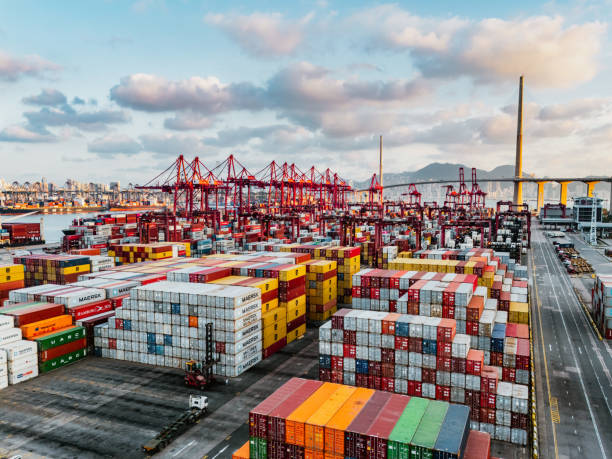
Changes in trade policy can alter cargo flows between markets. For the logistics sector, attention must focus not only on U.S.-bound volumes but also on how exporters adjust transport plans when orders change.
Booking and vessel schedules: Order adjustments or deferred delivery dates may require cancellation or amendment of existing bookings. Early action is necessary to minimize cancellation fees and protect delivery timelines.
Inland transport and port operations: Cargo must reach the port in time for the planned vessel. Production delays or buyer requests for postponement may necessitate revised trucking schedules, container drop-off times and port delivery appointments.
Warehousing and container detention: Goods unable to sail on schedule increase storage pressure. For temperature-sensitive products such as frozen seafood, cold-storage costs can become material. For furniture and industrial goods, prolonged storage affects warehouse capacity and inventory turnover.
Customs procedures and documentation: Accurate HS classification, origin determination and supporting documentation are essential. Enterprises should also verify origin certificates, commercial documents and any records that may be required during verification.
Mode selection remains a key decision. Ocean freight is generally appropriate for high-volume, cost-sensitive shipments, while air freight may be considered for high-value, urgent or time-critical cargo. Switching from ocean to air is rarely cost-neutral and can significantly erode order margins.
It should be noted that the proposed 35% tariff alone does not provide a basis for predicting ocean freight rate movements. Freight rates continue to depend on demand, carrier capacity, port conditions and broader trade patterns on each trade lane.
HS Code Review and Exclusion List to Accurately Assess Risk
The proposed exclusion list of 2,121 8-digit HS lines is information enterprises cannot overlook. Relying solely on commercial product names to determine exclusion eligibility risks overlooking classification differences.
A single product may have multiple technical characteristics, compositions or end-uses that result in different HS classifications. Enterprises must therefore compare product descriptions against the proposed list and verify classification rules in the importing market.
Textile, wood, seafood and electronics products each have distinct material, construction and functional characteristics. It should not be assumed that all products within a sector share the same exclusion status.
Enterprises should also maintain complete production records, raw-material documentation, certificates of origin and product-formation evidence. These records form the basis for responses to any verification requests by authorities.
Correct tariff classification and complete documentation further facilitate smooth customs clearance and reduce the risk of additional costs arising from documentation errors.
Market Diversification and Logistics Cost Control
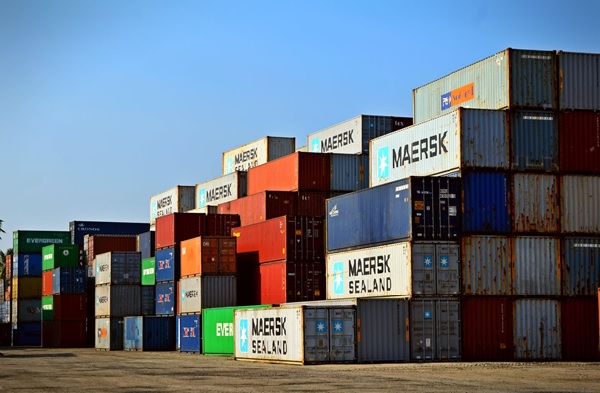
Heavy reliance on a single market leaves enterprises vulnerable to policy shifts. Market diversification should therefore be treated as a long-term strategy rather than a short-term contingency measure.
Vietnam is a party to multiple free-trade agreements, including the CPTPP, EVFTA and RCEP. These frameworks provide preferential market access and tariff benefits when origin and other regulatory requirements are fully met.
Each market, however, has distinct import standards, documentation requirements and logistics characteristics. Seafood exporters must prioritize temperature control and quality assurance; wood-product exporters must optimize packing dimensions and container stowage; electronics exporters must focus on transit time and cargo protection.
Market expansion must therefore proceed in parallel with logistics planning. Securing new customers without viable transport solutions can still result in cost and schedule difficulties.
On the cost-management side, enterprises should regularly evaluate the full landed cost of each order, encompassing inland transport, ocean or air freight, port charges, storage, container detention, customs formalities and related surcharges.
Rather than selecting carriers solely on the lowest freight rate, enterprises should also assess schedule reliability, transit time and the ability to manage exceptions. A low-rate option that frequently experiences schedule changes can ultimately generate higher total costs.
Early engagement with freight forwarders allows more time to compare routes, check vessel schedules and plan container stuffing, thereby reducing reactive adjustments when orders fluctuate.
Monitoring the Investigation Timeline and Preparing Scenarios for 2027
According to the Ministry of Industry and Trade, USTR is expected to hold public hearings beginning 25 January 2027. A final determination is anticipated no earlier than February 2027 and no later than 11 March 2027.
Between now and that date, enterprises should monitor three key developments: the outcome of USTR consultations, the progress of ART negotiations, and any adjustments to the exclusion list.
These scenarios are preparatory tools only and do not constitute forecasts of the investigation’s final outcome.
The Government has also issued a Resolution dated 21 November 2026 on a comprehensive plan for managing trade surpluses and mitigating risks in international trade for the 2026–2030 period. Enterprises may refer to the orientations in that Resolution when developing sector-specific risk-management plans.
Proactive Policy Monitoring and Supply-Chain Flexibility
The proposed maximum additional tariff of 35% on Vietnamese goods is a development that exporters must monitor closely in the coming months. However, while a final determination remains pending, wholesale changes to business or logistics plans are not yet warranted.
The priority is to identify precisely which products are at risk, which contracts require review, and which cost items may arise if the policy is implemented.
For the logistics sector, the ability to organize flexible transport, control schedules, manage documentation and coordinate among stakeholders will help limit disruptions to import–export operations.
An effective supply-chain plan is not merely a matter of securing a competitive freight rate. It also encompasses demand forecasting, inventory control, proactive handling of changes, and ensuring that goods are delivered on time and in accordance with requirements.
As trade policy continues to evolve, enterprises that maintain strong information readiness, clear contractual frameworks and flexible logistics options will be better positioned to sustain operations and protect their competitive position in international markets.
Source:
https://www.sggp.org.vn
https://cafef.vn
https://amp.congthuong.vn
PACIFIC STAR LOGISTICS CO.LTD
📞 +84 938 111 005
📩 info@pasl.com.vn
🏘️27-29 Ngo Thi Bi Street, Tan Hung Ward, Hochiminh City