
Cao Bằng is facing numerous opportunities to effectively leverage its geoeconomic advantages, positioning the border-gate economy as a key driver of growth. Sharing a border of over 333 km with the Guangxi Zhuang Autonomous Region (China), along with an established network of border gates and ongoing inter-regional transport projects, the province is shifting from traditional border trade toward a modern border-gate economic ecosystem. Developing transport infrastructure, logistics, expanding markets, and enhancing export value have been identified as core tasks to widen development space, boost competitiveness, and generate new growth momentum.
Leveraging Geoeconomic Advantages to Expand Development Space
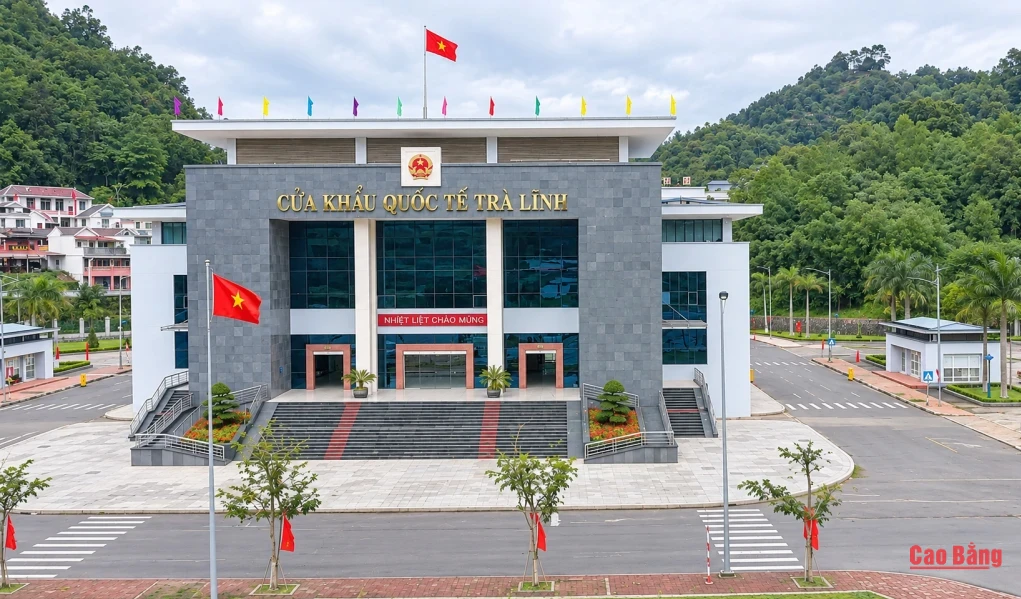
As a mountainous border province in the northernmost region of Vietnam, Cao Bằng holds a strategic position in trade connectivity between Vietnam and China. With over 333 km of border adjacent to Guangxi, the province currently hosts two international border gates—Trà Lĩnh and Tà Lùng—along with two bilateral border gates, Sóc Giang and Lý Vạn. These serve as vital hubs for import and export activities, cargo transit, and cross-border trade.
Beyond its geographic strengths, Cao Bằng possesses the potential to act as a transit bridge connecting goods from southwestern China to the deep-water seaports of Hải Phòng, Quảng Ninh, and the broader ASEAN market. As regional trade expands, effectively tapping into this border-gate system will not only generate import-export revenues but also stimulate the service, processing industry, transport, and commercial sectors.
However, transforming geographic advantages into tangible economic momentum requires a fundamental shift in how the border-gate economy is developed. Rather than relying primarily on basic cross-border buying and selling, Cao Bằng must gradually build an integrated supporting service system where transport, warehousing, logistics, cold storage, and goods processing form the foundation.
A key catalyst for this transformation is the inter-regional transport network. The ongoing Đồng Đăng – Trà Lĩnh expressway project is expected to create a breakthrough in connectivity, shortening freight transit times and improving access to economic centers, seaports, and domestic consumption markets.
Similarly, the proposed Bắc Kạn – Cao Bằng expressway project is anticipated to further expand trade corridors, enabling goods from neighboring localities to easily access the province’s border gates. Synchronized transport links will reduce logistics costs and transit times, thereby increasing Cao Bằng’s appeal to import-export businesses and investors.
According to Dr. Phạm Xuân Hòe, former Deputy Director of the Banking Strategy Institute (State Bank of Vietnam) and General Secretary of the Vietnam Leasing Association, to maximize its potential as a border province, Cao Bằng must prioritize upgrading transport infrastructure and seamlessly linking expressways with border trade routes and checkpoint systems.
Alongside infrastructure investments, the province needs to establish a comprehensive commodity database, streamline cargo handling operations, and formulate strategic plans for high-potential product groups. This will pave the way for specialized trade connections with the Chinese market rather than direct competition with major established gates like Lạng Sơn or Lào Cai.
Adopting a specialized development path tied to regional and international market connectivity will enable Cao Bằng to better exploit its existing potential while creating distinct competitive advantages in border trade.
Accelerating Planning and Attracting Investment in Key Logistics Projects
Alongside transportation investments, spatial planning around border-gate areas is being actively deployed by Cao Bằng. This serves as a vital preparatory step to secure land funds, attract social resources, and establish functional zones dedicated to commerce, services, production, and logistics.
Notably, the master zoning plan (scale 1/2,000) for the Tà Lùng International Border Gate area—covering approximately 1,708 hectares—was approved by the Provincial People’s Committee under Decision No. 1057/QĐ-UBND dated August 15, 2024.
For the Trà Lĩnh International Border Gate area, a 1/2,000 scale zoning plan covering roughly 336 hectares is currently being finalized for approval. Meanwhile, zoning plans for the Lý Vạn border gate and the Bản Khoòng border opening are underway, covering approximately 214 hectares with completion expected in 2026.
Synchronized zoning of border areas is crucial for organizing spatial development. Based on these plans, the province can proactively allocate land for storage yards, logistics centers, cargo transshipment hubs, processing facilities, and supporting import-export services, thereby overcoming the fragmented development and lack of integration between trade and logistics.
Crucially, Cao Bằng is orienting its efforts toward attracting major investors with strong financial capacity and expertise to spearhead key projects in border areas.
Key initiatives include an inland container depot (ICD) and agricultural, forestry, and fishery export-import transshipment hub in Trà Lĩnh, spanning approximately 80 hectares with an estimated total investment of 1 trillion VND. This project is expected to expand storage, warehousing, and cargo transfer capacities for cross-border trade.
Additionally, the province plans to attract an agricultural, forestry, and fishery processing facility covering 20 hectares with an investment of 250 billion VND, alongside a logistics center and smart border-gate infrastructure project in Tà Lùng and Trà Lĩnh, covering 20 hectares with an estimated capital of 800 billion VND.
Other targeted projects include a high-end resort and tourism complex in Đình Phong commune spanning 300 hectares (estimated at 1.5 billion VND / 1,500 billion VND), and an aluminum industry industrial park infrastructure project in Tà Lùng covering 150 hectares (estimated at 1,300 billion VND).
These projects are expected to generate new growth momentum for the border zones while expanding operational space for enterprises in transportation, warehousing, distribution, processing, and commerce.
According to Mr. Lý Quốc Khánh, Deputy Head of the Provincial Economic Zone Management Board, Cao Bằng is focusing on finalizing its master plans and compiling a list of priority projects for the 2026–2030 period. The province is simultaneously seeking investment in logistics, cold storage, distribution centers, cross-border e-commerce, and the Trà Lĩnh ICD.
The ultimate objective is to systematically build an integrated service network capable of handling rising cargo flows. In particular, developing cold storage, preservation systems, and distribution centers will enhance support for agricultural produce, foods, and goods with stringent storage and transit requirements.
This serves as a prerequisite for Cao Bằng to transition from a mere transit hub into a provider of value-added logistics services, boosting import-export efficiency.
Positioning Each Border Gate and Targeting Markets for Competitive Advantage
Beyond infrastructure and planning, clearly defining the specific roles and advantages of each border gate—while proactively securing stable source markets—is vital for the sustainable development of Cao Bằng’s border-gate economy.
In reality, each border gate possesses unique characteristics and advantages. Differentiating their functions and development orientations enables the province to concentrate resources, avoid scattered investments, and maximize infrastructure efficiency.
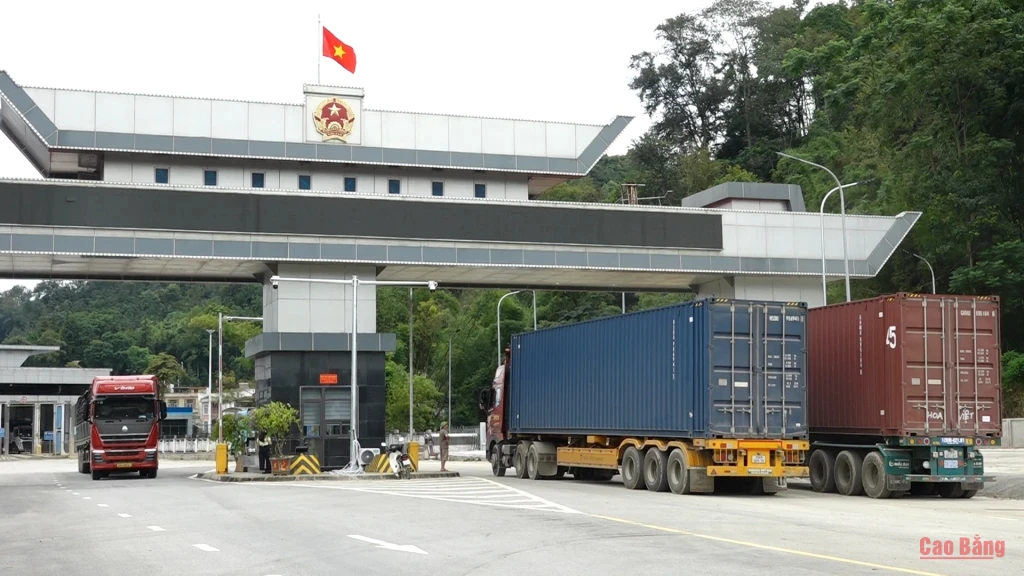
Under the provincial strategy, the Trà Lĩnh International Border Gate is prioritized for logistics, warehousing, processing, and modern border services. It occupies a strategic location along the Trà Lĩnh – Longbang economic corridor, offering direct connectivity with Sichuan, Chongqing, and other provinces in western and southwestern China.
These regions represent massive consumer markets with high populations and strong purchasing power. Connecting with these areas opens opportunities for Cao Bằng enterprises to penetrate deeper into China’s domestic market rather than limiting operations to immediate border-region trade.
Meanwhile, the Tà Lùng International Border Gate will continue to leverage its strengths in warehousing systems, import-export operations, and trade connectivity, serving as a vital node for cargo flows and commercial support services.
For the Lý Vạn and Sóc Giang border gates, the province aims for specialized exploitation tailored to specific commodity groups and trade advantages. This complementary approach prevents the gates from competing against one another for the same resources and functions.
Mr. Nguyễn Anh Quế, Member of the Provincial Party Committee and Head of the Provincial Economic Zone Management Board, stated that to fulfill its border economic goals, Cao Bằng must first accurately position its markets and primary border gates.
Regarding the Chinese market, the province focuses on two main tiers. The first tier comprises neighboring border localities, prioritizing direct commercial exchanges and cross-border trade formats.
The second tier covers central and deep interior regions of China. This is designated as the primary, long-term strategic market where official-quota exports are prioritized to ensure stability and sustainability.
Accordingly, Cao Bằng is channeling resources to develop Tà Lùng and Trà Lĩnh into leading gateway nodes capable of steering the broader border economy, while shaping Lý Vạn and Sóc Giang to handle specialized goods.
Accurate market positioning not only helps businesses better plan production and business activities but also elevates import-export quality. Crucially, targeting deep inland Chinese markets requires businesses to pay strict attention to product quality, origin traceability, packaging standards, and quarantine compliance.
Meeting these requirements is essential for local goods to integrate deeply into Chinese distribution and consumption channels, laying the foundation for stable, long-term exports.
Linking the Border Economy with Production and Processing to Elevate Local Goods
A pressing challenge for Cao Bằng’s border-gate economy is that locally produced goods account for a small proportion of total exports through the province. The vast majority of exported goods consist of agricultural products collected and transshipped from other localities.
This indicates that while import-export activities have grown, the linkage between the border-gate economy and local production and processing remains below potential.
Focusing exclusively on transshipment yields economic benefits that do not fully match the province’s gateway advantages. Consequently, developing local supply sources, raising processing rates, and increasing product value are viewed as essential long-term tasks.
To achieve this, provincial departments and agencies are coordinating to design plans linking the border-gate economy with raw material zoning. At the same time, Cao Bằng is prioritizing investments in agricultural, forestry, food, and medicinal herb processing projects, progressively building integrated supply chains spanning production, procurement, primary processing, industrial processing, distribution, and export.
Furthermore, the province is promoting preservation, primary processing, and packaging facilities that meet export standards. This is a critical step for agricultural products, extending shelf life and minimizing transit losses.
Building local product brands is another priority. With stable quality, clear origins, and compliance with importing market regulations, products stand a much better chance of entering major distribution channels.
In addition, supporting businesses in meeting quarantine and food safety standards demanded by the Chinese market is indispensable. Enterprises must proactively understand import regulations, refine production workflows, ensure traceability, and monitor quality right from the raw material source.
This not only boosts export capacity but also fosters a tighter connection between the border-gate economy and local agricultural and industrial sectors, allowing the benefits of cross-border trade to spread across agriculture, processing services, and local livelihoods.
Striving for 10% Border-Gate Economic Growth by 2027
Backed by synchronized orientations in infrastructure, planning, markets, and supply sources, Cao Bằng has set clear targets to elevate the role of the border-gate economy within its local economic structure.
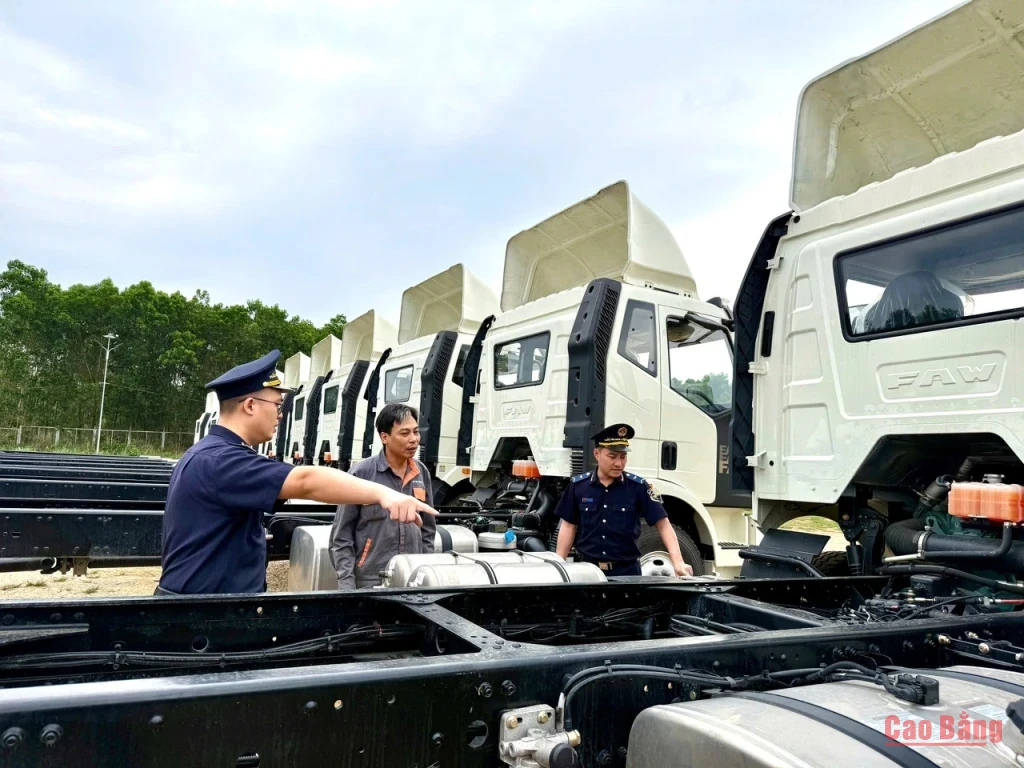
According to the plan, the province aims for a 10% growth rate in the border-gate economy by 2027, with total import-export turnover reaching $1.9 billion, import-export tax revenues exceeding 2 trillion VND, and infrastructure fee collections surpassing 61 billion VND.
These targets reflect Cao Bằng’s firm resolve to effectively unlock its border trade potential while demanding synchronized and feasible implementation measures.
Achieving these goals requires accelerating infrastructure investment, completing border-zone master plans, and facilitating the swift deployment of logistics, warehousing, and transshipment projects.
Equally important are improving the investment climate, helping enterprises access market data, and removing bottlenecks in import-export operations. Enhanced infrastructure and services will give businesses more opportunities to scale up, find partners, and expand markets.
Notably, strengthening coordination among departments, functional border forces, local authorities, and the business community is essential to streamline management, keep trade flows smooth, and resolve bottlenecks in transit.
Over the long term, the border-gate economy must develop in close coordination with other economic sectors. Smooth transportation supports logistics; advanced logistics boosts cargo handling capacity; industrial processing creates value-added goods; and robust import-export activities expand market outlets for local production.
Unlocking Resources to Make the Border Economy a New Growth Engine
Moving from geoeconomic advantages to enhanced competitiveness requires synchronized efforts across all levels of government, sectors, and the business community. For Cao Bằng, developing the border-gate economy goes beyond exploiting a borderline—it is an opportunity to restructure the economic space, widen regional linkages, and integrate deeper into regional trade networks.
Transport infrastructure and logistics form the foundation; zoning creates space for investment attraction; market positioning sets the direction; and upgrading product quality determines deep participation in export value chains.
Once these elements are deployed in tandem, Tà Lùng and Trà Lĩnh can fulfill their roles as leading gateways, while Lý Vạn and Sóc Giang continue to operate along specialized lines, forming an interconnected and complementary trading network.
Concurrently, the development of logistics centers, ICDs, cold storage, and processing hubs will add value to import-export activities while reducing reliance on transshipped goods from outside sources.
By precisely positioning markets, unlocking investment resources, and expanding value chains, Cao Bằng is laying a solid foundation for a modern border-gate economic ecosystem. This will serve as a crucial springboard to enhance competitiveness, boost border trade, fully harness gateway advantages with China, and drive socio-economic development in the years ahead.
Source:
https://baocaobang.vn
https://www.vietnam.vn
PACIFIC STAR LOGISTICS CO.LTD
📞 +84 938 111 005
📩 info@pasl.com.vn
🏘️27-29 Ngo Thi Bi Street, Tan Hung Ward, Hochiminh City